Weld inspection is a textbook industrial computer-vision problem. An inspector looks at a seam, finds the weld bead and the base metal, spots any surface anomaly and decides whether the part passes. The first three steps are perception; the last one is a standards question.
This project trains a YOLO11x detector to do the perception part: localise the weld line, the workpiece, porosity and generic defects in a single pass. It is a research prototype, not a certified inspection system, but the validation report is honest enough to be useful.
What the model actually sees
Four classes, in this order:
| ID | Class | Meaning |
|---|---|---|
| 0 | Defect | Generic weld defect |
| 1 | Welding Line | Weld bead / seam |
| 2 | Workpiece | Base metal part |
| 3 | porosity | Porosity |
The checkpoint is deliberately large: 56.8 M parameters and 194.4 GFLOPs. For offline or semi-automated inspection, accuracy is worth more than the last few milliseconds of latency. A smaller variant makes sense only after the dataset matures.
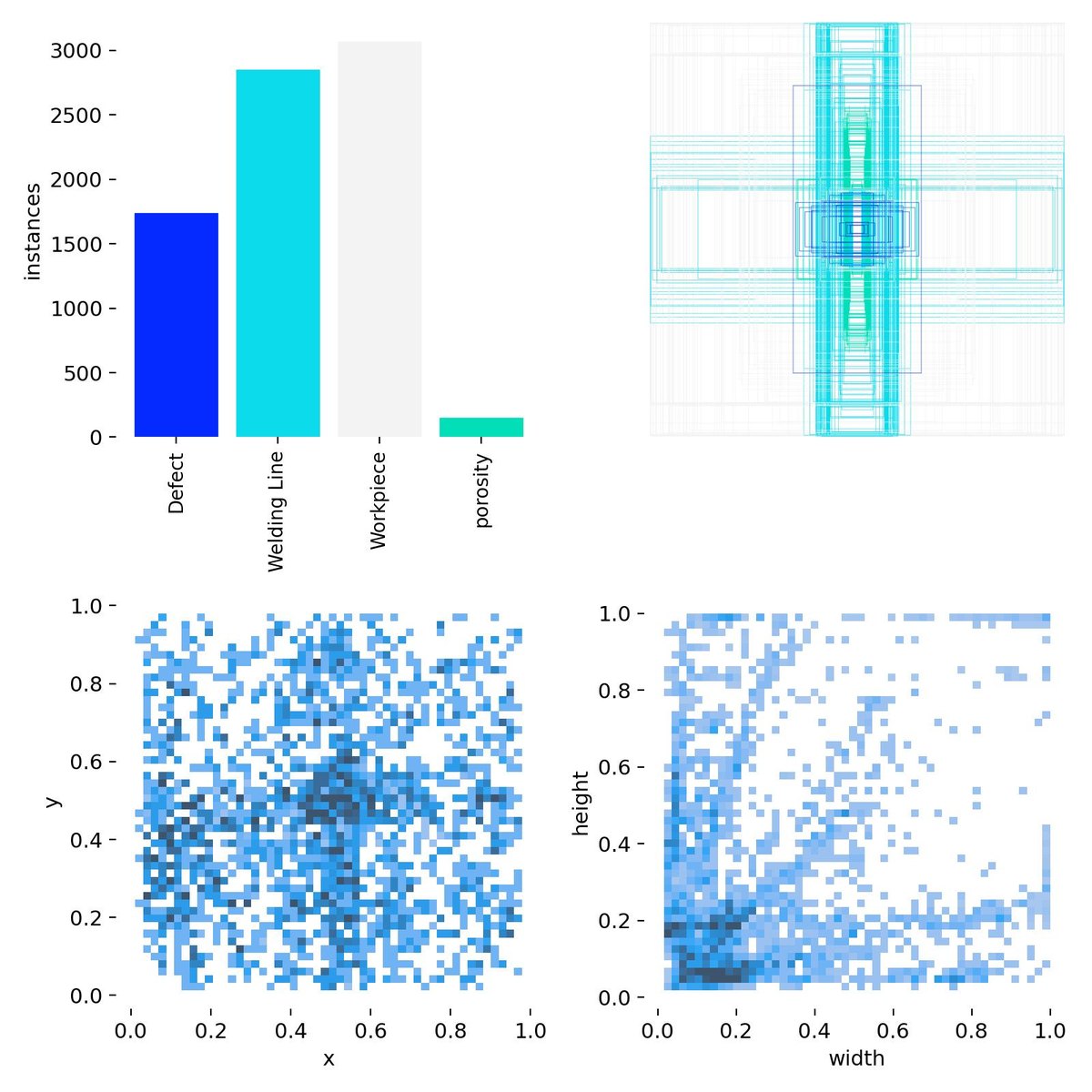
The numbers, and what they mean
On a validation split of 116 images / 773 instances:
| Class | Precision | Recall | mAP@50 | mAP@50-95 |
|---|---|---|---|---|
| all | 0.826 | 0.827 | 0.842 | 0.632 |
Defect | 0.552 | 0.427 | 0.445 | 0.202 |
Welding Line | 0.873 | 0.966 | 0.966 | 0.679 |
Workpiece | 0.941 | 0.987 | 0.992 | 0.938 |
porosity | 0.939 | 0.927 | 0.965 | 0.710 |
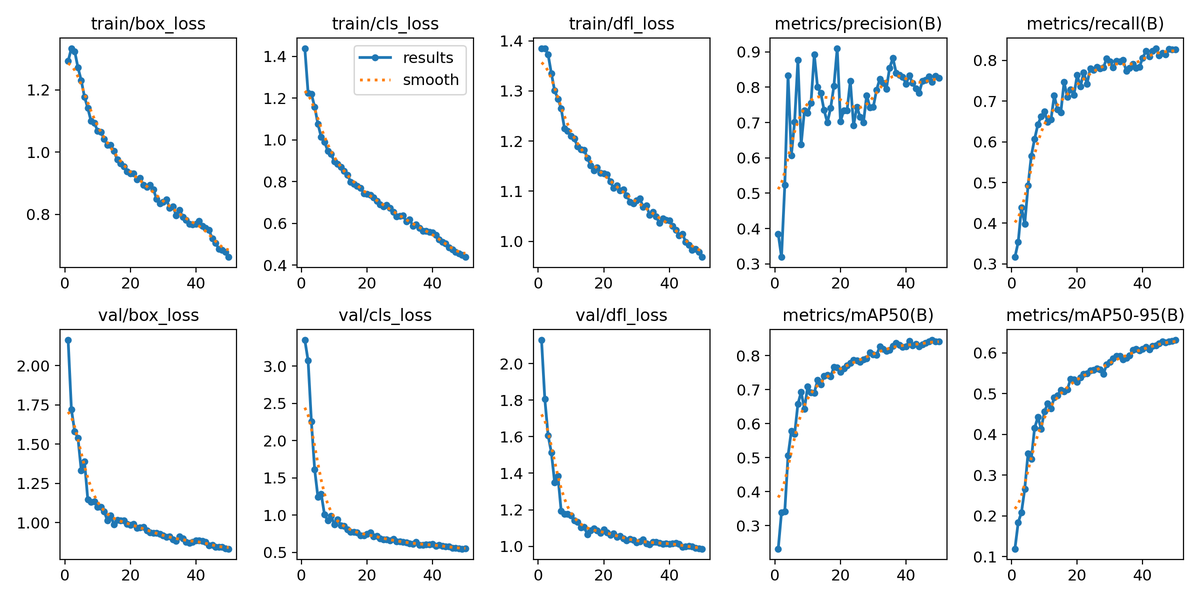
The headline 0.842 mAP@50 is carried by the structural classes. Workpiece (0.992) and Welding Line (0.966) are almost solved; porosity (0.965) is surprisingly strong. The generic Defect class reaches only 0.445 mAP@50 and 0.427 recall — it groups cracks, undercuts, spatter and lack-of-fusion, which look nothing alike. That is the real research problem, not the architecture.
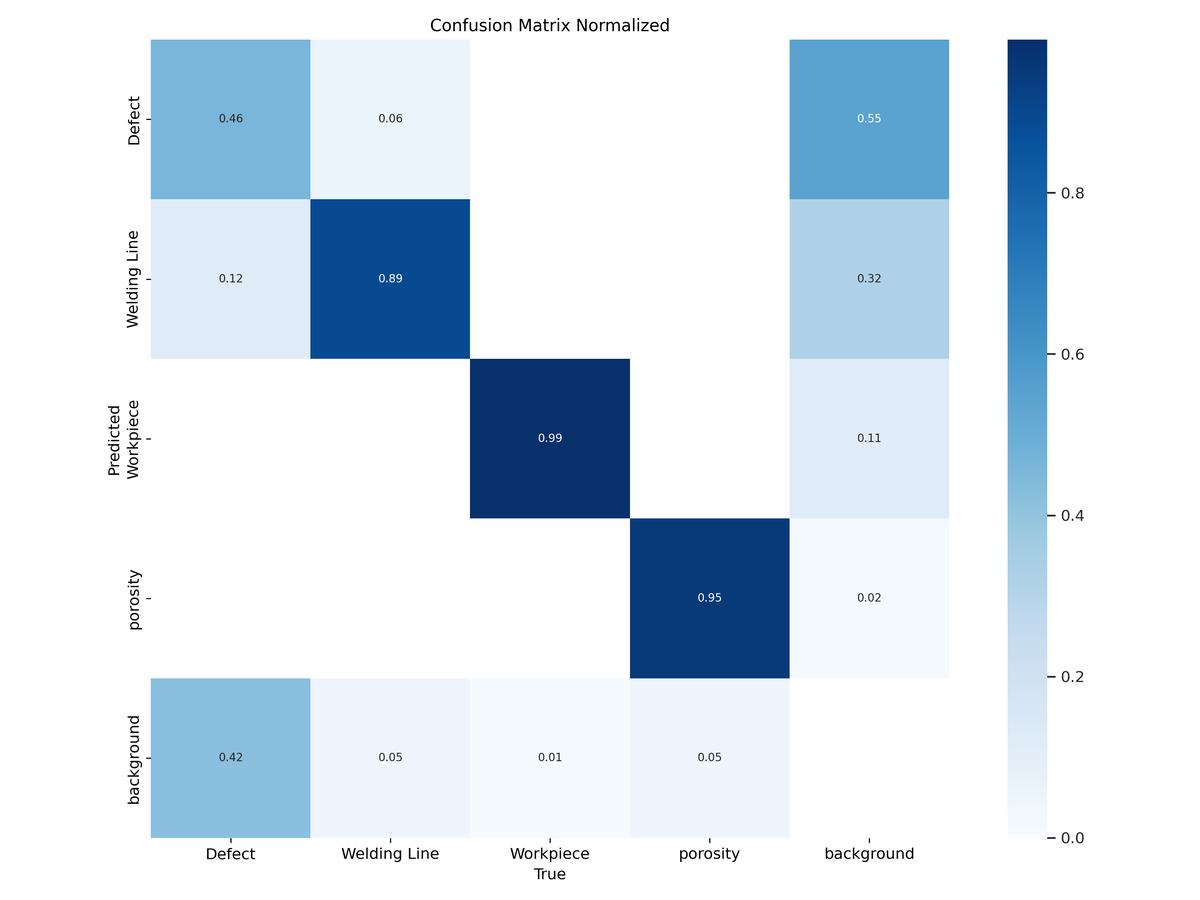
A second caveat: 116 validation images is small. These numbers are a baseline for further work, not a production acceptance test.
Demo: sample predictions
These are validation predictions from the published checkpoint, not live inference:
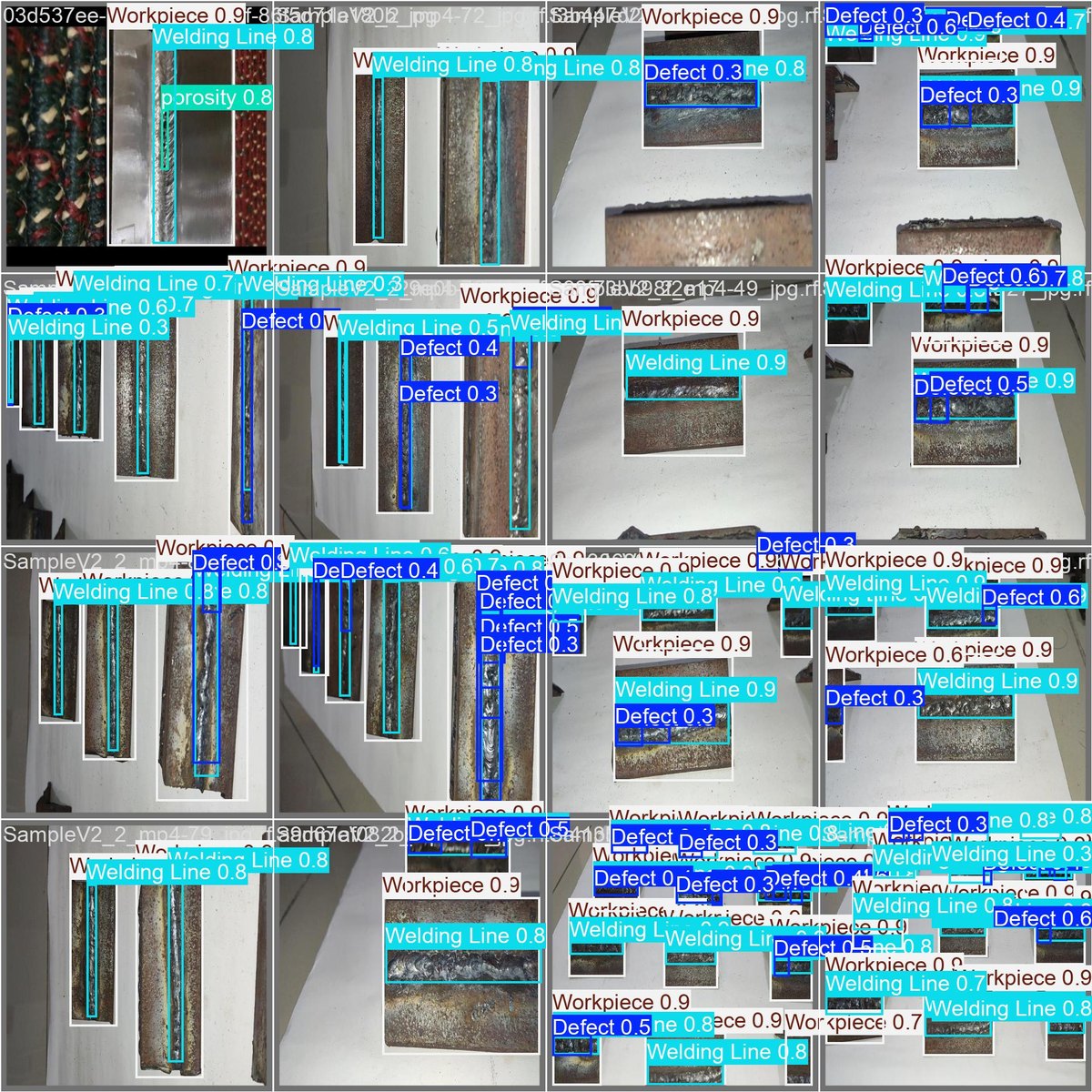
The boxes on the seam and the part are the model’s localisation output. To run the model yourself, the weights live on a gated Hugging Face model card — accept its conditions and authenticate first:
hf download jparedesDS/welding-defects-detection \
  welding_defects_yolo11x.pt --local-dir weights
from ultralytics import YOLO

model = YOLO("weights/welding_defects_yolo11x.pt")
results = model.predict("weld.jpg", conf=0.25, save=True, device=0)

for box in results[0].boxes:
    print(model.names[int(box.cls)], float(box.conf), box.xyxy.tolist())
Open the model on Hugging Face · Read the full project in the model zoo
From boxes to an inspection decision
The detector emits boxes, not verdicts. A usable pipeline adds four steps:
- Region filtering — keep defect boxes that fall on or near the detected
Welding Line. - Size measurement — convert box dimensions to millimetres with a calibrated capture rig.
- Rule engine — compare defect type and size with the applicable acceptance standard.
- Human review — route borderline or low-confidence cases to a qualified inspector.
Standards such as ISO 5817, ASME IX or AWS D1.1 define acceptance; a neural network does not. The model only makes the inspector faster.
What is next
- Split
Defectinto cracks, undercuts, spatter and lack-of-fusion, and collect more examples per type. - Add pixel-level segmentation for defect sizing.
- Calibrate distance, angle and lighting so box sizes mean something physical.
- Validate against one specific standard and process before claiming readiness.
The original repository is archived; the code, notebook and evaluation now live in the object-detection-models zoo. MIT licensed.
La inspección de soldaduras es un problema clásico de visión artificial industrial. Un inspector mira la costura, localiza el cordón y el metal base, detecta cualquier anomalía superficial y decide si la pieza pasa. Los tres primeros pasos son percepción; el último es una cuestión de normativa.
Este proyecto entrena un detector YOLO11x para la parte de percepción: localizar en una sola pasada la línea de soldadura, la pieza, la porosidad y los defectos genéricos. Es un prototipo de investigación, no un sistema de inspección certificado, pero el informe de validación es suficientemente honesto para servir de base.
Lo que ve realmente el modelo
Cuatro clases, en este orden:
| ID | Clase | Significado |
|---|---|---|
| 0 | Defect | Defecto genérico de soldadura |
| 1 | Welding Line | Cordón / costura |
| 2 | Workpiece | Pieza de metal base |
| 3 | porosity | Porosidad |
El checkpoint es deliberadamente grande: 56,8 M de parámetros y 194,4 GFLOPs. En inspección offline o semiautomática, la precisión vale más que los últimos milisegundos de latencia. Una variante más pequeña tendrá sentido cuando el dataset madure.
Las cifras y lo que significan
Sobre una partición de validación de 116 imágenes / 773 instancias:
| Clase | Precisión | Recall | mAP@50 | mAP@50-95 |
|---|---|---|---|---|
| todas | 0,826 | 0,827 | 0,842 | 0,632 |
Defect | 0,552 | 0,427 | 0,445 | 0,202 |
Welding Line | 0,873 | 0,966 | 0,966 | 0,679 |
Workpiece | 0,941 | 0,987 | 0,992 | 0,938 |
porosity | 0,939 | 0,927 | 0,965 | 0,710 |
El titular 0,842 mAP@50 lo sostienen las clases estructurales. Workpiece (0,992) y Welding Line (0,966) están casi resueltas; porosity (0,965) funciona sorprendentemente bien. La clase genérica Defect se queda en 0,445 mAP@50 y 0,427 de recall: agrupa grietas, socavaduras, salpicaduras y falta de fusión, que no se parecen entre sí. Ese es el verdadero problema de investigación, no la arquitectura.
Segunda advertencia: 116 imágenes de validación son pocas. Estas cifras son una línea base para seguir trabajando, no un ensayo de aceptación industrial.
Demo: predicciones de ejemplo
Estas son predicciones de validación del checkpoint publicado, no inferencia en directo:
Las cajas sobre la costura y la pieza son la salida de localización del modelo. Para ejecutarlo tú mismo, los pesos están en una tarjeta de modelo restringida de Hugging Face: acepta las condiciones y autentícate primero:
hf download jparedesDS/welding-defects-detection \
  welding_defects_yolo11x.pt --local-dir weights
from ultralytics import YOLO

model = YOLO("weights/welding_defects_yolo11x.pt")
results = model.predict("weld.jpg", conf=0.25, save=True, device=0)

for box in results[0].boxes:
    print(model.names[int(box.cls)], float(box.conf), box.xyxy.tolist())
Abrir el modelo en Hugging Face · Ver el proyecto completo en el zoo
De cajas a una decisión de inspección
El detector emite cajas, no veredictos. Un flujo usable añade cuatro pasos:
- Filtro por región — conservar las cajas de defecto que caen sobre o cerca de la
Welding Linedetectada. - Medición de tamaño — convertir las dimensiones de la caja a milímetros con una captura calibrada.
- Motor de reglas — comparar tipo y tamaño de defecto con la norma de aceptación aplicable.
- Revisión humana — enviar los casos dudosos o de baja confianza a un inspector cualificado.
Normas como ISO 5817, ASME IX o AWS D1.1 definen la aceptación; una red neuronal no. El modelo solo hace más rápido al inspector.
Lo siguiente
- Separar
Defecten grietas, socavaduras, salpicaduras y falta de fusión, y recoger más ejemplos de cada tipo. - Añadir segmentación a nivel de píxel para medir defectos.
- Calibrar distancia, ángulo e iluminación para que el tamaño de las cajas tenga significado físico.
- Validar contra una norma y un proceso concretos antes de hablar de despliegue.
El repositorio original está archivado; el código, el notebook y la evaluación viven ahora en el model zoo de object-detection-models. Licencia MIT.